Download PDF Sverre Fehn: The Pattern of Thoughts By Per Olaf Fjeld
Be various with other individuals who don't read this publication. By taking the good advantages of reading Sverre Fehn: The Pattern Of Thoughts By Per Olaf Fjeld, you can be wise to spend the time for reviewing various other publications. And also here, after getting the soft fie of Sverre Fehn: The Pattern Of Thoughts By Per Olaf Fjeld and serving the connect to give, you could also find other book collections. We are the best location to seek for your referred book. And also now, your time to get this book as one of the compromises has actually prepared.
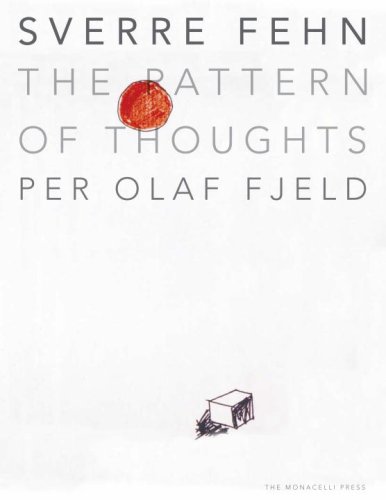
Sverre Fehn: The Pattern of Thoughts By Per Olaf Fjeld

Download PDF Sverre Fehn: The Pattern of Thoughts By Per Olaf Fjeld
Visiting the collection daily could not become your style. You have so many jobs as well as tasks to do. However, you have to look for some analysis publications, from literary to the politics? Just what will you do? Preferring to buy the book in some cases when you are associating friends to the book shop appropriates. You could search and find guide as you such as. But, what regarding your referred book is not there? Will you walk once more and also do look as well as find any more? Occasionally, many individuals will be so lazy to do it.
Positions currently this Sverre Fehn: The Pattern Of Thoughts By Per Olaf Fjeld as one of your book collection! However, it is not in your cabinet compilations. Why? This is guide Sverre Fehn: The Pattern Of Thoughts By Per Olaf Fjeld that is given in soft file. You could download the soft documents of this amazing book Sverre Fehn: The Pattern Of Thoughts By Per Olaf Fjeld currently and also in the web link offered. Yeah, different with the other individuals that look for book Sverre Fehn: The Pattern Of Thoughts By Per Olaf Fjeld outside, you could obtain less complicated to posture this book. When some individuals still walk into the shop as well as browse the book Sverre Fehn: The Pattern Of Thoughts By Per Olaf Fjeld, you are here just remain on your seat and obtain the book Sverre Fehn: The Pattern Of Thoughts By Per Olaf Fjeld.
Book has the new information and also lesson every single time you review it. By reading the content of this publication, also couple of, you can get just what makes you really feel satisfied. Yeah, the presentation of the understanding by reading it could be so small, however the effect will be so great. You could take it much more times to understand more concerning this book. When you have completed material of Sverre Fehn: The Pattern Of Thoughts By Per Olaf Fjeld, you could truly understand exactly how value of a book, whatever guide is
You could rapidly finish them to visit the web page and then delight in getting guide. Having the soft documents of this book is likewise good enough. By in this manner, you might not need to bring guide anywhere. You can conserve in some suitable gadgets. When you have determined to start checking out Sverre Fehn: The Pattern Of Thoughts By Per Olaf Fjeld once more, you could start it everywhere and also every single time as soon as well done.
- Amazon Sales Rank: #1000635 in Books
- Brand: Brand: The Monacelli Press
- Published on: 2009-06-30
- Released on: 2009-06-30
- Original language: English
- Number of items: 1
- Dimensions: 10.90" h x 1.20" w x 8.50" l, 3.57 pounds
- Binding: Hardcover
- 304 pages
- Used Book in Good Condition
Review "[Sverre Fehn's] talent for applying Modernist ideas to traditional Nordic forms and materials earned him the Pritzker Architecture Prize in 1997 and made him the most prominent Norwegian architect of the postwar era." —New York Times"[Sverre Fehn: The Pattern of Thoughts is] a wonderful, very complete tribute to a great architect and interesting person written by a devoted admirer. If you're a fan, it's well worth your time."—UnBeige.com
About the Author Per Olaf Fjeld is a professor at the Oslo School of Architecture and Design. Since 1975, he has run a small architectural studio with his wife, Emily Randall Fjeld. He has written a number of books and articles on architecture, most recently, Sverre Fehn: The Pattern of Thought, a biography and perceptive critique on the acclaimed postwar modernist.
Excerpt. © Reprinted by permission. All rights reserved. From: PrefaceA thin rectangular brass nameplate hung on his door: Sverre Fehn–Architect. That was all. I knocked, he opened the door, and I started my first job as an architect. Thirty-five years later, Fehn has finally placed this thin strip of brass into his drawer. During those thirty-five years, I listened to his stories, worked with him, and visited his buildings. In this book, it is my aim to bring to life his voice as an architect, educator, and storyteller with the capacity to transform a personal narrative and its essence into physical space. In my first book, Sverre Fehn: The Thought of Construction, published in 1983, Fehn was at a midpoint in his career. He had little work in that period and was able to set aside time for a publication. The background material for that book consisted of several notebooks recording conversations and interviews that took place from 1978 to 1980. Not everything in those notebooks was used or relevant at the time, since the purpose of that volume was to introduce Fehn’s work to a broader international audience. Beginning with my early association with Fehn’s office and continuing as I taught with him at the Oslo School of Architecture until he retired in 1994, I took notes on all his lectures I attended and, whenever possible, our conversations. On and off we talked about putting together a second book, but neither one of us had the time or focus such a project required. Yet one day as I looked through some of my old notebooks, it became clear that without an effort to transcribe, organize, and make the connections between my notations and Fehn’s work, this information would be lost. When I finally set to work, I discovered I had boxes of notebooks not only on Fehn’s lectures but also on his friends and colleagues, which gave further depth and immediacy to the material. But the most rewarding discovery has been to find that my notes correspond to and compliment his sketches, which have always been an essential tool in his creative process. From: Chapter 1, Midsummer FramesVery few Scandinavian architects educated just after World War II have been able to capture the Nordic tradition and transform it into a vibrant modern architectural language in the manner of the Norwegian architect Sverre Fehn. His work has an intuitive confidence in how to use the Nordic landscape and its particular light conditions within the built culture, and yet throughout his career each period has reflected a refined sensitivity to international changes and attitudes in architecture. It can be compared to a poetic work conceived on an isolated mountain by a writer with an uncanny, intuitive sense of what is going on in the towns below. The result is a fresh identity for each project and, behind that, a conceptual framework that is equally surprising and demanding. For many years, situating Fehn’s talent and impact within modern Scandinavian architecture was not clear. He was born in a remote and, at the time, poor country, but this isolation was also an advantage in that he met the world outside with energy and curiosity and without expectations. Today, he has gained a place alongside other important figures in architecture and has influenced a new generation of Scandinavian architects through his years as a teacher. Yet this recognition has been slow to take hold at home in Norway. Sverre Fehn’s work has the same meticulous workmanship, clarity of construction, and use of material found in the best of prewar Scandinavian architecture and design. It is a heritage he has always respected but at the same time has reworked and added new layers. Fehn’s creative process is rather complex. He edges around a given topic or project, nearing it by way of a myriad of poetic stories, phrases, and sketches, and through this process strips the constructive thought down to its most basic state. Conceptually, he places material in two distinct categories: material as mass, most often represented by concrete, and material that through its intrinsic nature carries a precise or clear set of dimensions, most often represented by wood. Parallel to this deliberation on material, Fehn considers a range of inventive stories and images. At the point he is able to bring a particular story into his material concept, a creative resistance force belonging to structure evolves. A conscious use of sequential movement is also part of this plot. And similar to the best in Scandinavian architecture, the architect deems catching light and bringing it into an interior spatial presence more important than focusing on the view out.
Sverre Fehn: The Pattern of Thoughts
By Per Olaf Fjeld PDF
Sverre Fehn: The Pattern of Thoughts
By Per Olaf Fjeld EPub
Sverre Fehn: The Pattern of Thoughts
By Per Olaf Fjeld Doc
Sverre Fehn: The Pattern of Thoughts
By Per Olaf Fjeld iBooks
Sverre Fehn: The Pattern of Thoughts
By Per Olaf Fjeld rtf
Sverre Fehn: The Pattern of Thoughts
By Per Olaf Fjeld Mobipocket
Sverre Fehn: The Pattern of Thoughts
By Per Olaf Fjeld Kindle